
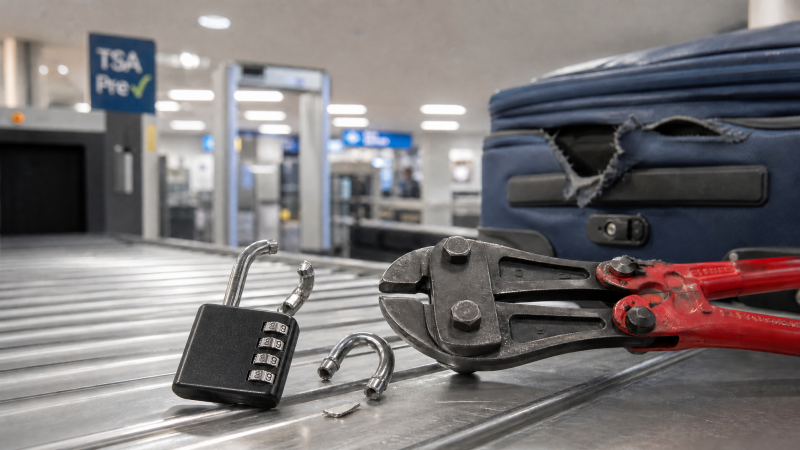
Few things are more annoying than arriving at baggage claim and realizing your lock has been cut off your suitcase. It feels random, but there’s usually a simple explanation: your bag was selected for inspection, and the lock couldn’t be opened without damage.
Why Locks Get Cut
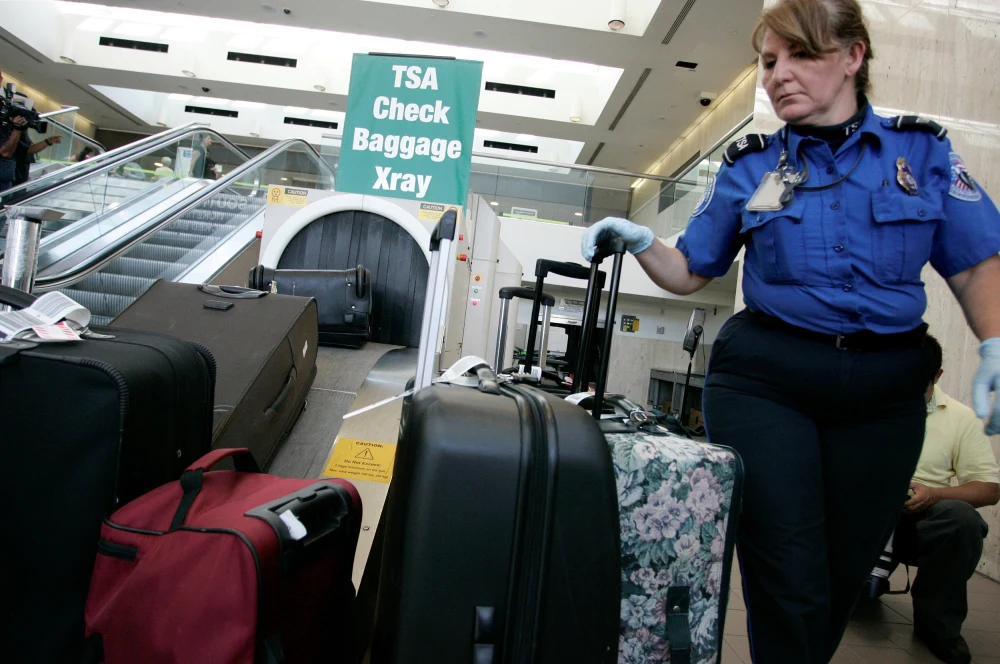
Checked luggage goes through X-ray screening before it ever reaches the plane. If something inside looks unclear or suspicious on the scan—dense electronics, tightly packed items, food, or oddly shaped objects—security may need to open the bag for a closer look.
When that happens, agents have to physically access the contents. If your suitcase is secured with a standard padlock or a non-approved lock, they can’t open it with authorized tools. The fastest option is simply cutting it off.
Once the inspection is done, your luggage continues through the system, but often without any lock at all.
The Simple Fix: TSA-Approved Locks
The easiest way to avoid this situation is to use a TSA-approved lock.
These locks are designed for airport security systems used in the U.S. and many other countries. Instead of forcing the lock, security officers can open it using a master key, inspect your bag, and relock it afterward.

You’ll usually recognize them by the small red diamond symbol. That marking tells security the lock can be opened non-destructively during inspection.
In practice, the process is straightforward: your bag is opened with authorized tools, checked if needed, and secured again before continuing its journey.
A More Reliable Option for Frequent Travelers
For travelers who fly often or carry valuable gear, a well-built TSA-approved lock makes a noticeable difference.
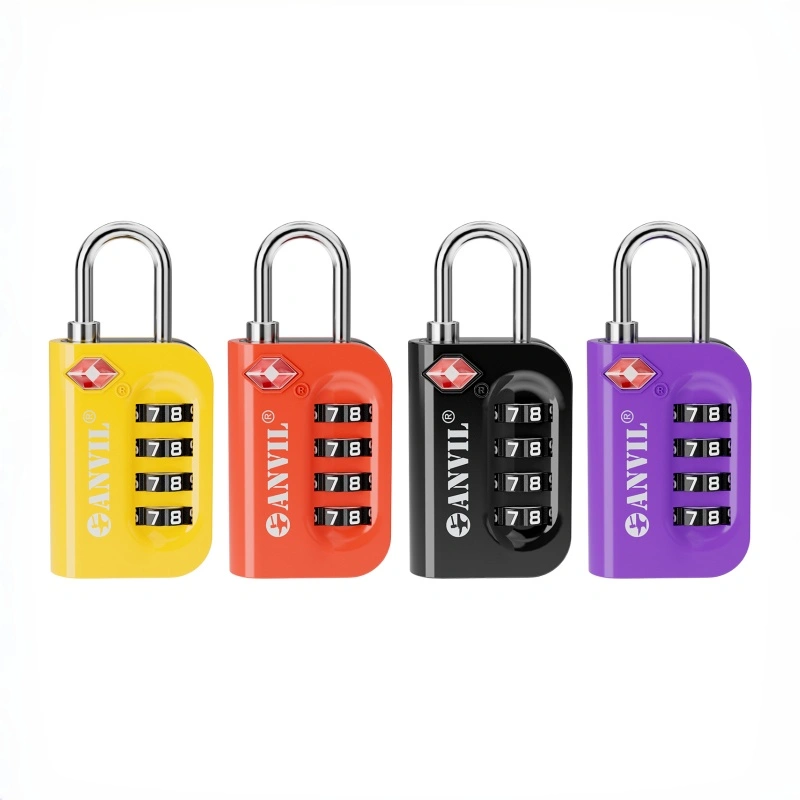
A heavy-duty option like the Anvil TSA Lock is designed specifically for repeated international travel. It follows TSA standards, features the red diamond identification, and is built to handle the wear and tear of baggage handling systems.
The goal isn’t just compliance—it’s durability and consistency, so your luggage stays secure without being sacrificed during routine inspections.
How to Reduce the Chance of Extra Inspections
You can’t avoid random security checks, but you can lower the odds of your bag being pulled aside.
Keep electronics organized instead of loosely packed, since tangled cables and dense clusters often create unclear X-ray images. Be especially careful with items like power banks, which are not allowed in checked luggage and will almost always trigger a manual inspection.
Also, avoid overpacking. When a suitcase is overly compressed, scanners have a harder time distinguishing individual items, which can lead to additional checks.
Traveling with Fewer Surprises
TSA-approved locks have become a global standard used across many international airports. Choosing one doesn’t just protect your luggage—it also helps security do their job without damaging your belongings.
A simple upgrade like a TSA-compliant lock can make a big difference in how smoothly your trip starts and ends.